
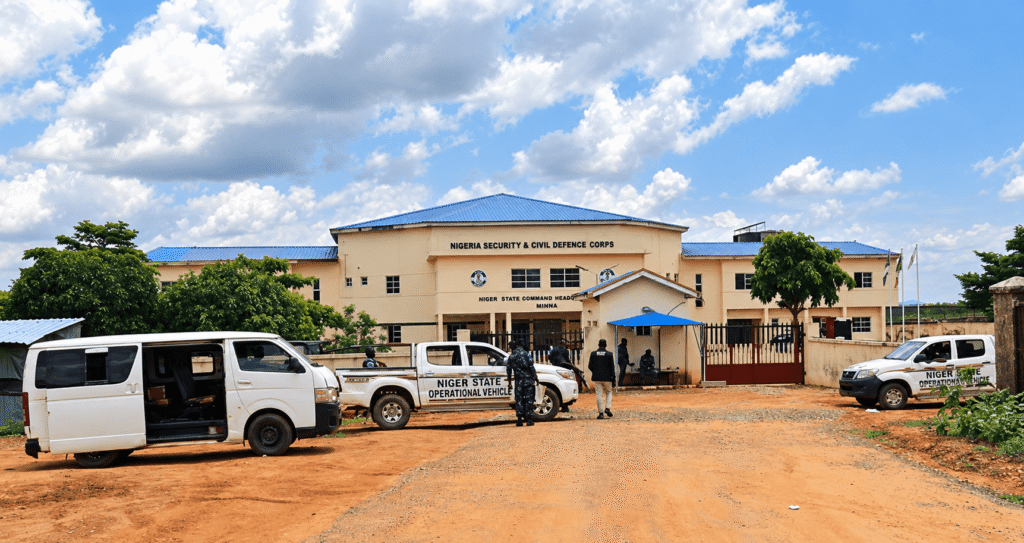
Survivors say dozens of detainees were packed into a tiny cell before an unidentified substance was allegedly sprayed inside. Thirty seven people died, many of them teenagers, and the Nigerian government has now launched multiple investigations into what happened.
MINNA, Nigeria, September 23, 2026 — New survivor accounts are intensifying scrutiny over the deaths of 37 suspected illegal miners in government custody in Niger State, with witnesses alleging that officers sprayed an unidentified substance into an overcrowded cell shortly before detainees began collapsing.
The deaths occurred after the Nigeria Security and Civil Defence Corps arrested dozens of artisanal miners during operations against suspected illegal mining around Minna.
Authorities have not established the cause of death.
But accounts from survivors have raised new questions about conditions inside the detention facility, the actions of officers on duty and whether the deaths could have been prevented.
President Bola Tinubu has ordered a full investigation, senior officers have been suspended, and a federal investigative committee has been given two weeks to determine what happened.
Survivors Describe an Overcrowded Cell
Survivors say the detention conditions were already severe before the situation turned deadly.
One witness said around 17 people were initially placed inside a cell measuring roughly five square metres.
More detainees were then brought in.
By the time the cell was filled, nearly 70 people were reportedly being held inside.
Survivors said they complained that the room was overcrowded and poorly ventilated, but their concerns were ignored.
They allege that officers later sprayed an unidentified substance under the door.
Witnesses described the smell as similar to perfume or pepper.
What happened next is now central to the investigation.
Detainees Began Collapsing
Several survivors said detainees began experiencing breathing problems and other symptoms after the substance was allegedly sprayed.
Some became disoriented.
Others collapsed.
Within hours, dozens were dead.
One survivor said detainees shouted for help and pounded on the locked door as people inside the cell struggled to breathe.
Another gave a similar account, saying the smell irritated their throats before people began losing consciousness.
The allegations have not been independently proven, and investigators have not established what, if anything, was sprayed inside the cell.
That remains one of the most important unanswered questions in the case.
37 Detainees Confirmed Dead
Authorities have confirmed that 37 people died while in NSCDC custody.
Many of the victims were reportedly teenagers and young men involved in artisanal gold mining.
The detainees had been arrested during operations against suspected illegal mining in Niger State.
The incident quickly triggered outrage, protests and demands for accountability.
Initial official statements suggested that a disease outbreak may have played a role in the deaths.
Authorities later said the cause had not been established and would need to be determined through investigation and medical examination.
That difference between the early official explanation and the survivors’ accounts has become a major focus of public attention.
Government Launches Multiple Investigations
President Tinubu ordered a full and transparent investigation into the deaths, including the circumstances of the arrests, detention conditions, number of people held at the facility and medical assistance provided.
The federal government has also suspended senior NSCDC personnel connected to the facility pending the outcome of the investigation.
A 10 member independent investigative committee has now been inaugurated by the Ministry of Interior.
The panel includes legal, medical, security and government representatives and has been given two weeks to submit its findings.
Investigators are expected to examine possible negligence, misconduct, responsibility and whether compensation should be recommended for affected families.
Separately, police in Niger State have taken control of the scene and begun their own investigation.
Authorities Warn Against Evidence Tampering
Interior Minister Olubunmi Tunji Ojo has ordered officers connected to the case to preserve all records and evidence.
He warned that anyone who attempts to destroy evidence, intimidate witnesses or obstruct the investigation could face legal consequences.
The directive underscores the seriousness with which authorities say they are treating the case.
Officials are also expected to examine the chain of command at the detention facility and determine who was responsible for detainee welfare during the hours leading up to the deaths.
Protests Follow the Deaths
The deaths triggered protests in Minna as residents demanded answers.
Clashes followed, and authorities imposed a curfew after unrest spread through parts of the city.
The incident has also renewed wider concerns about detention conditions and the treatment of suspects by Nigerian security agencies.
Families of some of the dead have separately accused officials of mistreatment.
Those allegations remain under investigation.
Cause of Death Still Unresolved
Despite the growing number of survivor accounts, investigators have not yet established the medical cause of the 37 deaths.
That distinction remains critical.
Survivor testimony points toward overcrowding, possible exposure to an unidentified substance and severe breathing difficulties.
Early official accounts raised the possibility of illness.
Government investigators must now determine whether either explanation, or a combination of factors, is supported by forensic evidence.
The investigation is also complicated by the fact that many of the victims were buried soon after their deaths.
For now, the central question remains unresolved: how did 37 detainees enter government custody and die within hours inside the same facility?
Until investigators answer that question, the deaths in Minna are likely to remain one of Nigeria’s most closely watched accountability cases.