President Donald Trump accelerated the signing of a preliminary agreement with Iran this week, insisting it be finalized during a visit to France rather than waiting for a planned ceremony in Switzerland, as his administration sought to launch the next phase of negotiations aimed at limiting Tehran’s nuclear program.
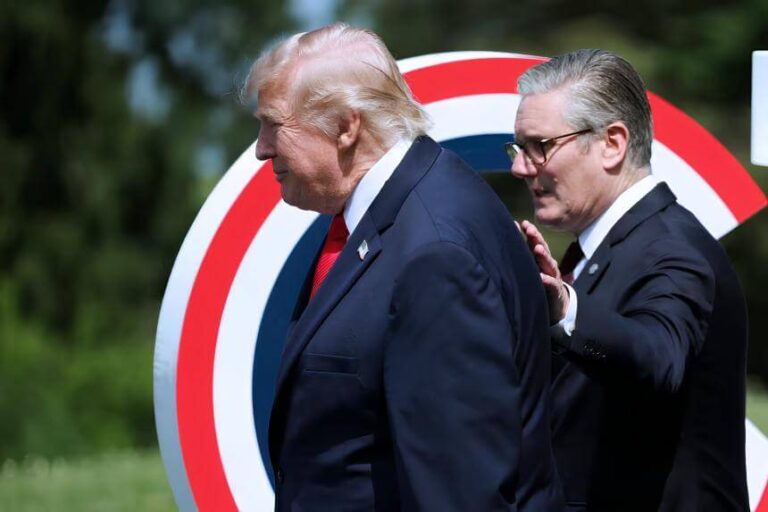
The memorandum of understanding was signed Wednesday at the Palace of Versailles after Trump requested that the process be completed immediately upon learning the document had been finalized. French President Emmanuel Macron helped facilitate the impromptu signing while senior U.S. and French officials arranged the necessary logistics.
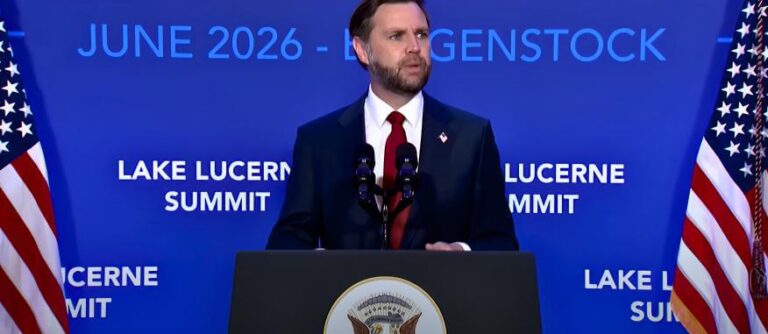
The agreement had originally been scheduled for formal signature two days later at a meeting near Lake Lucerne in Switzerland, where Vice President JD Vance was expected to oversee the next round of technical discussions with Iranian representatives. Those plans were later shelved after Iran withdrew from the gathering amid renewed violence involving Israel and Hezbollah in Lebanon.
Although a renewed ceasefire between Israel and Hezbollah took effect Friday, uncertainty surrounding the broader regional situation has raised questions about the durability of the U.S.-Iran understanding.
The preliminary accord establishes a framework for negotiations focused on Iran’s nuclear activities. Technical talks are expected to continue over a 60-day period to determine how commitments outlined in the memorandum will be implemented and verified.
Political pressure shaped negotiations
The agreement comes after months of military confrontation and mounting economic concerns inside the United States. Administration officials viewed the prolonged conflict as increasingly costly both strategically and politically, with worries about energy markets, global oil supplies and domestic economic stability influencing the White House’s approach.
Trump acknowledged this week that economic risks factored into his decision to pursue the agreement, saying he wanted to avoid broader financial disruption.
The administration has defended the negotiations against criticism from some Republicans who argue the framework offers excessive concessions to Tehran before key nuclear commitments have been secured.
Senate Armed Services Committee Chairman Roger Wicker criticized provisions that include a proposed $300 billion reconstruction fund, arguing the financial commitments would exceed those associated with the Obama-era nuclear agreement.
Trump rejected suggestions that Iran negotiated from a position of strength, maintaining that U.S. military pressure compelled Tehran to enter talks. In a social media post Friday, he said Iran would receive no financial assistance during the initial 60-day negotiating period.
Negotiations advanced despite repeated setbacks
Reaching the preliminary agreement involved weeks of difficult diplomacy marked by repeated delays and regional security crises.
Senior administration officials met frequently throughout June to assess the evolving negotiations while weighing military developments across the Middle East. Intelligence and defense officials reportedly expressed skepticism that Iran would ultimately fulfill any long-term commitments related to its nuclear program, though the administration ultimately agreed to move forward with the framework.
Officials familiar with the discussions said Trump consistently pushed advisers toward securing an agreement that could end the conflict and create space for more detailed negotiations.
Progress was repeatedly threatened by military incidents.
An encounter between a U.S. Apache helicopter and an Iranian drone on June 8 prompted a new exchange of military strikes, temporarily jeopardizing diplomatic efforts. Around the same time, Qatari mediators continued discussions in Tehran, seeking to narrow remaining differences between the two governments.
Diplomatic momentum also faced another challenge following an Israeli strike on Beirut’s southern suburbs. U.S. officials believed the escalation risked derailing negotiations that were nearing completion, prompting additional mediation efforts involving Qatar.
Negotiators ultimately preserved the framework after lengthy discussions, although Iran reportedly insisted the agreement not be publicly announced on Trump’s birthday. Mediators resolved the issue by coordinating the announcement according to Tehran’s local time, allowing both sides to proceed without further delaying the accord.
Questions remain over implementation
Despite the signing, significant details of the agreement remain unresolved.
The memorandum serves as a political framework rather than a final nuclear accord, with many technical provisions still subject to negotiation. Administration officials have also acknowledged the existence of additional understandings reached through private diplomatic channels that are not included in the published document.
Vice President Vance has emphasized that verification mechanisms, rather than terminology or informal side arrangements, will determine whether the agreement succeeds.
The administration released the memorandum before Iran formally approved more detailed proposals, arguing that delaying publication could have postponed negotiations on implementation.
The coming weeks are expected to focus on technical talks covering verification procedures, nuclear restrictions and broader commitments outlined in the preliminary framework, while regional tensions continue to test the fragile diplomatic progress.