Westminster is entering a period of rapid political flux as Sir Keir Starmer prepares to step down and attention increasingly turns to Greater Manchester Mayor Andy Burnham as a potential successor. A series of developments this week has intensified speculation about Labour’s next leadership direction and the composition of its future government.
Accelerating leadership uncertainty
Sir Keir’s announcement outlining a timetable for his departure has already reshaped internal party calculations. That shift was compounded when Health Secretary Wes Streeting publicly backed Burnham, narrowing the field of likely challengers and strengthening the perception among some MPs that the contest may be effectively tilting in one direction.
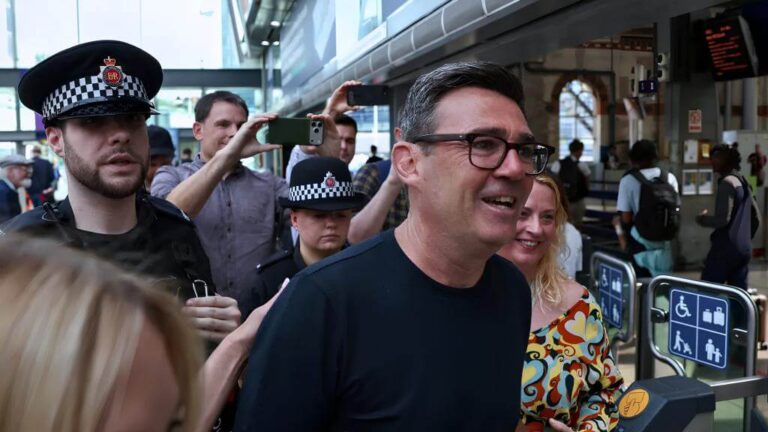
Burnham’s return to the House of Commons via a by-election in Makerfield, after years outside Parliament, has added further momentum to his profile within the party. His re-emergence has been greeted with visible support from segments of the parliamentary Labour Party, even as questions persist over his readiness for national office.
If he were to become prime minister, it would mark a dramatic political transition and potentially make him the UK’s fifth head of government in just four years.
Signals from the parliamentary party
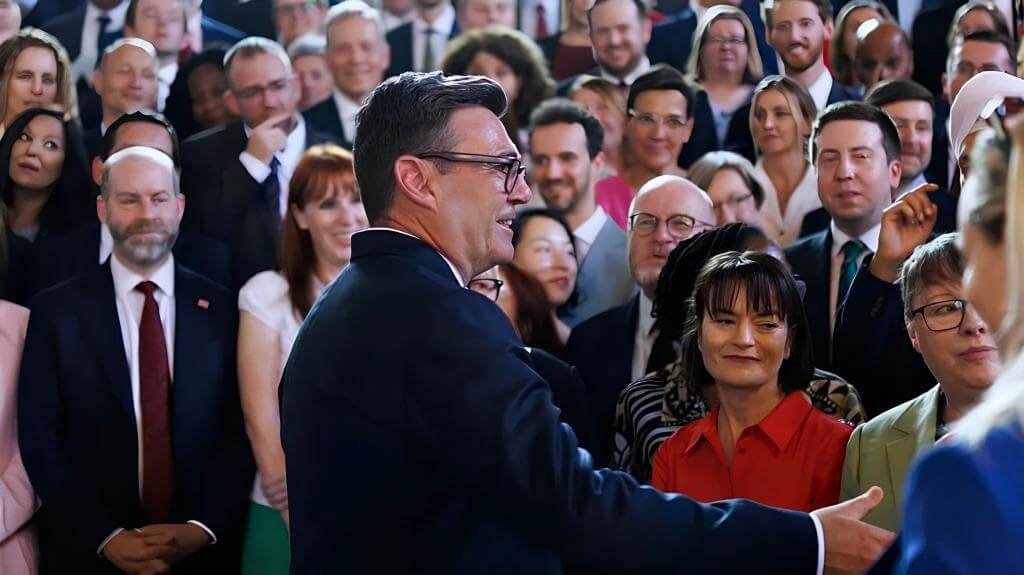
Senior Labour figures have been weighing the implications of the leadership shift, particularly around the future of key cabinet positions. Chancellor Rachel Reeves was present at one of Burnham’s recent events, a detail noted in Westminster circles given her central role in the current administration’s economic policy.
However, there is an expectation among some MPs that Burnham may seek to reshape the Treasury leadership if he assumes power, given Reeves’ close association with the outgoing government. Others suggest Streeting could be considered for a senior economic role, though he has denied any suggestion that such a position has been discussed.
Behind the scenes, Labour MPs are also reportedly considering whether alternative candidates, including Chief Secretary to the Prime Minister Darren Jones, could enter the leadership race, although there is little indication so far that he intends to challenge Burnham directly.
A candidate with limited national exposure
Burnham’s rapid ascent has prompted debate about his national political profile. While he is widely regarded as popular in Greater Manchester, his standing outside the region remains less tested.
Some within the party have expressed concern about the speed of his potential rise, noting that he was not an MP at the last general election and only recently returned to Parliament. His previous unsuccessful bids for Labour leadership have also been cited by sceptics as part of his political record.
Supporters, however, argue that Burnham’s appeal lies in his electoral credibility and his ability to connect with voters in areas where Labour has faced pressure from Reform UK. His supporters point to his local government record and his performance in a politically competitive region as evidence of his electoral resilience.
Policy questions and international outlook
Burnham has set out broad priorities focused on economic growth, cost of living pressures, housing, public services and opportunities for younger generations. However, detailed policy positions at national level remain limited, reflecting his recent focus on local governance and constituency campaigning.
That lack of detail is expected to come under scrutiny if he formally enters the leadership contest. Foreign policy, defence spending and the UK’s relationship with the United States are among the areas where his positions are not yet fully defined.
Any incoming prime minister would also face immediate decisions on military funding commitments and broader security policy, alongside managing relations with US President Donald Trump, should current geopolitical dynamics continue.
Internal divisions and party calculations
Within Labour, reactions to Burnham’s rise are mixed. Some MPs view him as a unifying figure with electoral appeal, while others worry about the optics of a rapid leadership change and the absence of a fully articulated national programme.
There is also concern among some MPs about the broader narrative: that leadership is shifting toward a figure who has not recently faced a general election campaign as a national leader. Critics privately question whether the party is coalescing around a candidate before fully assessing alternatives.
Despite this, momentum appears to be building around Burnham, particularly following Streeting’s endorsement and growing signals of support among senior figures.
What comes next
Attention now turns to whether Burnham will formally set out his vision for government and confirm whether he intends to seek the leadership. A contest, if triggered, is expected to test not only his policy positions but also the party’s appetite for rapid transition at the top of government.
For Labour MPs, the immediate challenge is navigating a leadership landscape that is shifting faster than expected, with limited clarity on where it may ultimately settle. For Burnham, the task ahead is to convert political momentum into a coherent national platform capable of withstanding scrutiny across domestic and international policy areas.