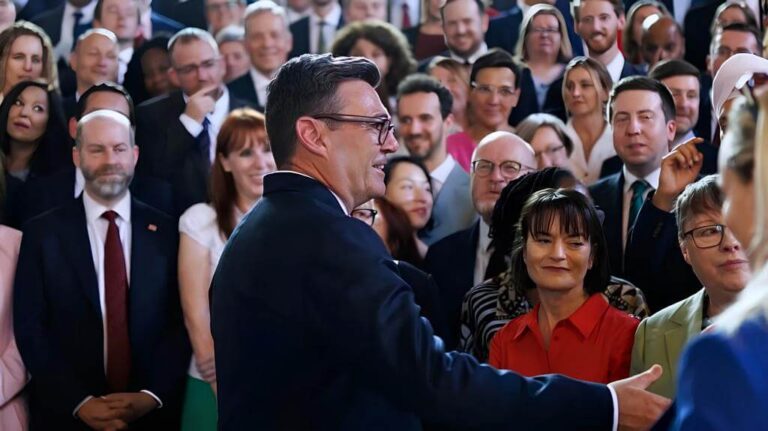
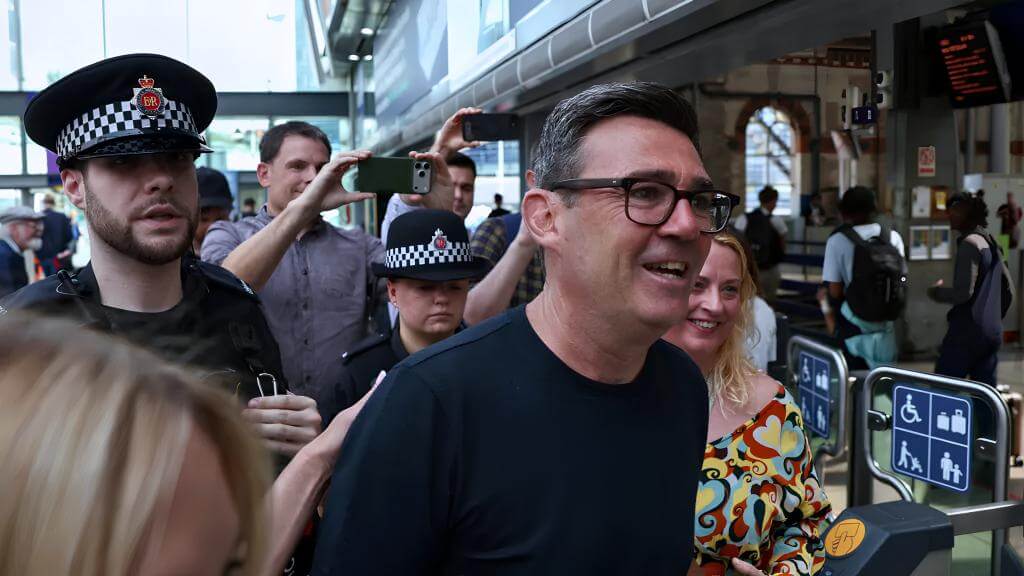
Andy Burnham, the former Mayor of Greater Manchester and long-serving Labour politician, has emerged as a leading figure in the party’s evolving leadership contest following Sir Keir Starmer’s resignation announcement and a growing realignment among Labour MPs.
Burnham has confirmed his intention to stand for the Labour leadership, positioning himself for a potential bid to become prime minister after securing a return to Parliament through a by-election victory in Makerfield. His candidacy has gained additional momentum after endorsement from Health Secretary Wes Streeting, a development that has reshaped early calculations within the party’s leadership race.
His re-entry into Westminster followed a decisive electoral performance in Makerfield, where Labour retained the seat with a significantly increased vote share compared to the 2024 general election. The result saw Reform UK finish second, though more than 9,000 votes behind Labour.
Now sworn back into Parliament after more than a decade outside the Commons, Burnham’s rapid rise has placed him at the centre of debate over Labour’s future direction and leadership succession.
Early life and education
Born in Liverpool in 1970, Burnham grew up in Culcheth in Cheshire, near Warrington, in a household with strong Labour Party ties. His father worked as a BT engineer and his mother as a GP receptionist. He has previously described becoming politically aware as a teenager and joining the Labour Party at the age of 14 after watching the BBC drama Boys from the Blackstuff, which depicted unemployment and social hardship in Liverpool.
Educated at a local Roman Catholic comprehensive school, he went on to study English at the University of Cambridge, becoming the first in his family to attend university. During his time there, he has written about experiencing social isolation and a sense of not fully belonging.
Alongside politics, Burnham developed an early interest in sport and music. He played cricket at school level and has long been associated with Everton Football Club and the northern indie music scene, including bands such as The Smiths and The Stone Roses.
Entry into politics and Westminster career
Burnham began his professional life in journalism before moving into political research roles. He worked for Labour MP Tessa Jowell before becoming a special adviser in government under Culture Secretary Chris Smith.
He was elected as MP for Leigh in Greater Manchester in 2001, marking the start of a parliamentary career that spanned more than a decade in Westminster. He held multiple ministerial roles during the Labour governments of Tony Blair and Gordon Brown, including chief secretary to the Treasury, culture secretary and health secretary.
His tenure as culture secretary included involvement in the political response to the Hillsborough disaster, where he played a role in advancing calls for further investigation following public pressure and criticism of earlier inquiries.
Leadership bids and ideological positioning
Burnham first entered the Labour leadership contest in 2010 following Gordon Brown’s resignation, finishing fourth. He mounted a second bid in 2015, where he was defeated by Jeremy Corbyn.
His political positioning has often been described as fluid, with critics suggesting he has adapted his views over time. Supporters argue he has consistently focused on public services and regional inequality.
Over the years, Burnham has supported policies ranging from remaining in the European Union during the Brexit referendum to later backing the nationalisation of key utilities such as water and energy. He also served in Corbyn’s shadow cabinet as shadow home secretary.
Mayor of Greater Manchester
In 2017, Burnham left Parliament to become the first Mayor of Greater Manchester, a role he has held following re-election in 2021 with an increased majority.
His mayoralty has been marked by major transport reform, including the creation of the Bee Network, which brought bus services under public control and integrated them with other transport systems. He also pledged to end rough sleeping in the region by 2020, a target that was not met.
Burnham’s national profile grew significantly during the Covid-19 pandemic, when he publicly challenged UK government decisions on regional restrictions, accusing ministers of unfair treatment of northern England. The confrontation earned him the informal label “King of the North” in political commentary.
Return to Westminster and leadership context
Burnham’s return to Parliament was secured after a by-election was triggered in Makerfield following the resignation of MP Josh Simons, who stepped aside to allow him to stand. Labour’s national executive approved his candidacy, paving the way for his re-entry into the Commons.
His return coincided with a difficult period for Labour in local and national elections, where the party faced losses and Reform UK made electoral gains in several areas.
In recent months, Burnham has increased his national interventions, including criticism of government fiscal rules and economic strategy. He has also signalled priorities focused on economic growth, public services, housing and living costs, though detailed national policy positions remain limited.
What happens next
Burnham is expected to set out a fuller leadership platform as Labour prepares for a formal contest. Any campaign is likely to scrutinise his experience outside Westminster, his policy direction on the economy and public spending, and his approach to foreign affairs and defence commitments.
Within Labour, discussions continue over whether additional candidates will emerge to challenge his frontrunner status. The coming weeks are expected to determine whether his rapid ascent translates into sustained support across the parliamentary party or triggers a broader contest for the leadership.