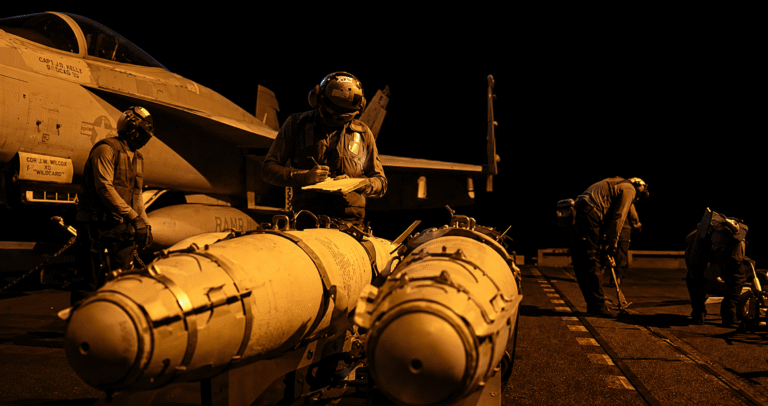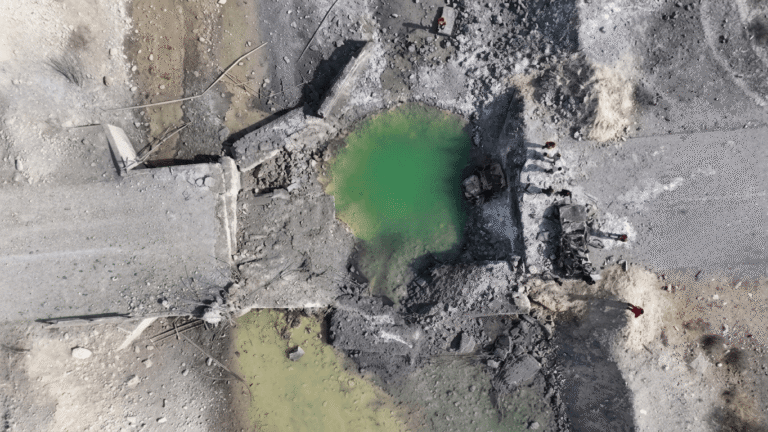
The United States has carried out another round of military strikes against Iran, extending its campaign into an 11th consecutive night as President Donald Trump warned that an underground nuclear facility could soon become the next target.
The latest strikes focused on military infrastructure that US officials say supports Iran’s operations in and around the Strait of Hormuz, where weeks of escalating hostilities have disrupted regional security and international shipping.
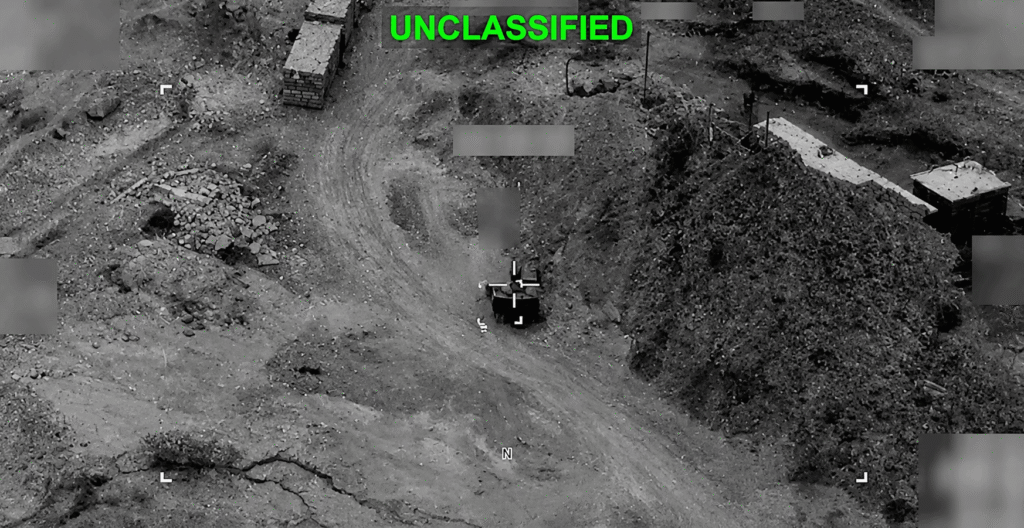
US Central Command said the attacks targeted military command facilities, drone storage sites, aircraft hangars, logistics hubs and maritime capabilities used by Iranian forces. The military said the operations are intended to reduce Iran’s ability to threaten commercial vessels transiting the strategic waterway.
Iranian state media reported that air defense systems were activated in Tehran as explosions were heard in several parts of the country, including Tabriz, Chabahar, Konarak and Bushehr, where Iran’s only operational nuclear power plant is located.
The latest military action came after Trump said the United States was preparing to strike an underground nuclear site near Natanz, identified as Pickaxe Mountain, where Iran is suspected of developing an undeclared uranium enrichment facility.
Speaking at the White House, Trump said the area could be targeted “very heavily” and argued that Iran would be unable to prevent such an attack.
Iran responded with a warning that any strike on its nuclear infrastructure would significantly expand the conflict. The country’s Khatam Al-Anbiya military command said attacks on the facility would be treated as a broader regional war, threatening retaliation against US interests as well as those of its allies and partners.
Regional tensions continued to spread beyond Iran.
Kuwait said its air defense systems intercepted Iranian drones overnight, while Bahrain and Jordan also reported shooting down incoming missiles and drones.
The conflict has also intensified pressure on global shipping routes.
US officials accused Iran of attacking more than 30 commercial vessels in the Strait of Hormuz over the past three months, saying the campaign has endangered civilian shipping and threatened freedom of navigation through one of the world’s busiest energy corridors.
Meanwhile, Yemen’s Iran-backed Houthi movement announced plans to block Saudi shipping through the Bab al-Mandab Strait, another critical maritime chokepoint linking the Red Sea to international markets.
The threat prompted immediate changes to commercial shipping routes. According to maritime risk analysts, two tankers carrying Saudi crude oil reversed course after leaving the port of Yanbu, diverting toward the Suez Canal instead of continuing through the Red Sea.
The growing risks to maritime trade have renewed concerns over global energy supplies as oil markets continue to monitor developments across the region.
The latest escalation follows the collapse of a memorandum of understanding signed by Washington and Tehran in June, which had sought to suspend military operations, reopen the Strait of Hormuz and create a pathway toward broader negotiations.
That agreement unraveled after renewed attacks on commercial shipping and retaliatory US strikes, returning both countries to open military confrontation.
The financial cost of the conflict is also rising. Defense Secretary Pete Hegseth told lawmakers on Tuesday that US military operations against Iran have now cost approximately $37.5 billion, an increase of nearly $8 billion since May.
Appearing before the Senate Appropriations Committee, Hegseth warned that military training programs could face cuts unless Congress approves additional funding to support the ongoing campaign.