Iraq is considering a range of options, including the possibility of leaving the Organization of the Petroleum Exporting Countries (OPEC), if the producer group does not significantly increase the country’s oil production quota, according to sources familiar with Iraq’s energy policy.
While discussions about an exit have taken place, the current strategy remains focused on securing a larger production allocation rather than withdrawing from the organization, a senior official at Iraq’s Oil Ministry said.
“Iraq expects its request to be treated with the utmost seriousness,” the official said, adding that if negotiations fail to produce a meaningful increase, Baghdad would examine all available alternatives. He described any decision to leave OPEC as premature.
The issue comes at a sensitive moment for the producer alliance. Iraq is OPEC’s second-largest oil producer and one of the organization’s five founding members. OPEC was established in Baghdad in 1960, making any potential Iraqi departure significant for the group’s standing. Earlier this year, the United Arab Emirates also left the organization.
Economic pressures intensify
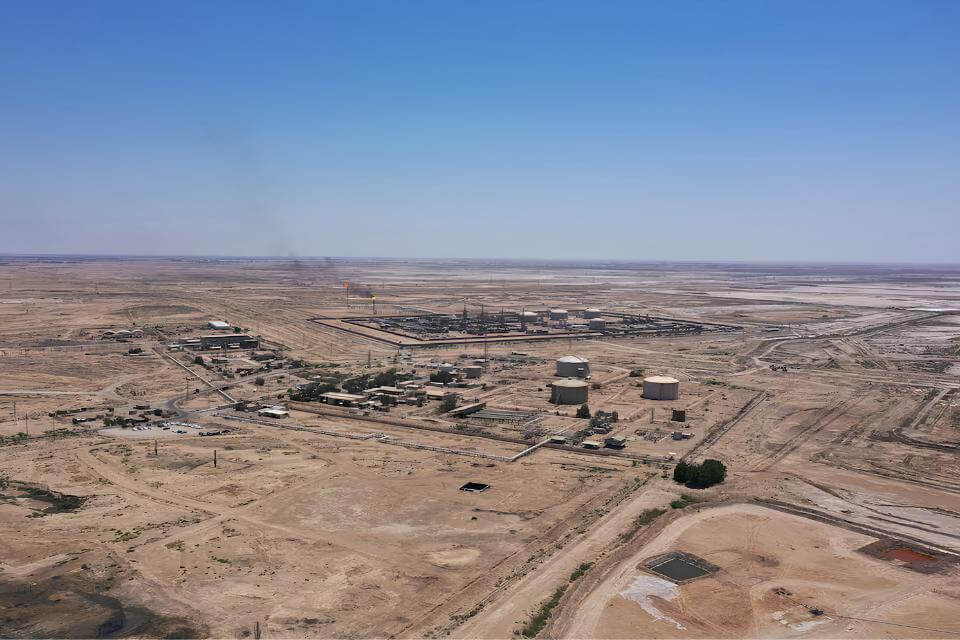
Baghdad’s push for a higher quota comes as Iraq faces mounting financial pressure linked to disruptions caused by the Iran war. The country’s economy relies heavily on oil exports, and interruptions to shipping through the Strait of Hormuz have constrained export volumes and reduced government revenue.
A government spokesperson confirmed that Iraq is working to restore its full export capacity but declined to comment on quota negotiations or reports that the country has weighed leaving OPEC.
The spokesperson, Haider al-Aboudi, said Iraq aims to increase oil production capacity to 7 million barrels per day over the coming years as part of its long-term energy strategy.
Baghdad seeks quota aligned with production capacity
Prime Minister Ali al-Zaidi has made economic recovery a central priority since taking office in May, identifying investment, reconstruction and anti-corruption measures as key objectives for his administration.
This week, he reiterated that Iraq wants its OPEC production quota to better reflect both its oil production capacity and its population, according to the state-run Iraqi News Agency (INA).
The request comes after seven core members of the wider OPEC+ alliance agreed to raise their production quotas by nearly 600,000 barrels per day between April and June. OPEC+ includes OPEC member states alongside other major oil producers, including Russia.
Market reaction and next steps
Oil prices briefly extended losses following reports that Iraq had considered its future within OPEC, with Brent crude trading below $73 a barrel.
OPEC had not responded to requests for comment at the time of publication.
No formal decision has been announced regarding Iraq’s membership, and officials indicate Baghdad’s immediate objective remains negotiating a substantially higher production quota while continuing discussions within the organization.