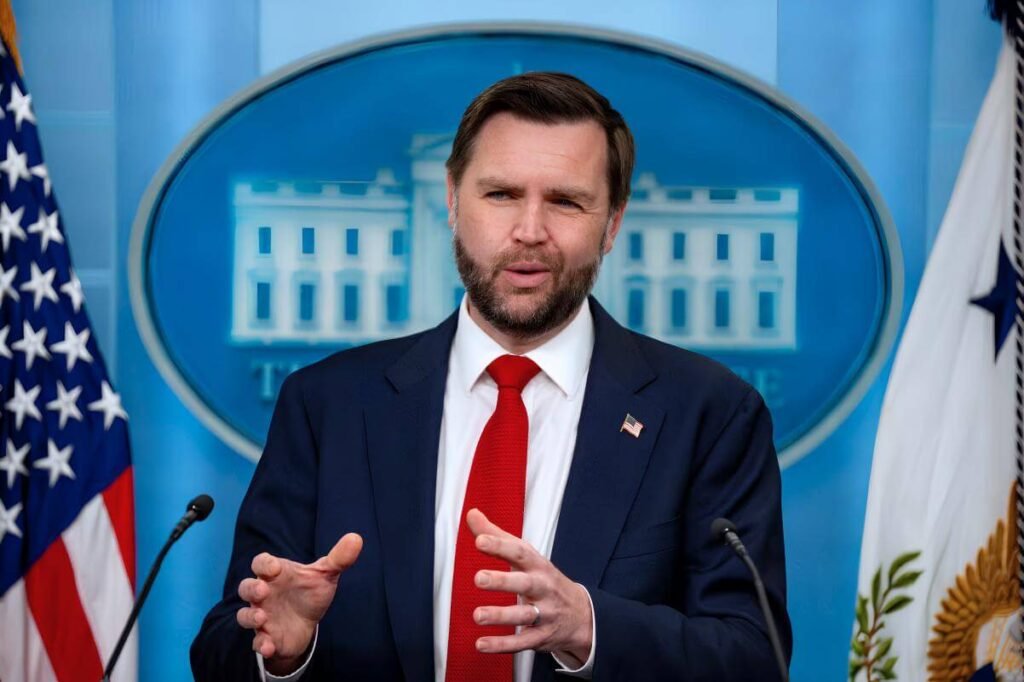
Planned technical negotiations between the United States and Iran have been postponed after US Vice President JD Vance withdrew from a scheduled visit to Switzerland, delaying the next phase of discussions following this week’s diplomatic agreement between the two countries.
The White House announced late Thursday that Vance would no longer travel to Switzerland, saying arrangements for the meeting had proved difficult and that logistical preparations remained incomplete. Officials said the United States remains committed to launching the technical discussions as soon as practical.
Switzerland’s Foreign Ministry later confirmed that the meeting at the Burgenstock resort had been postponed, while noting that preparations for future negotiations continue.
The talks were expected to focus on implementing the recently signed framework agreement and addressing technical details ahead of broader negotiations on long term issues, including Iran’s nuclear programme.
Under the agreement reached earlier this week, the United States agreed to end its naval blockade of Iran, while both sides committed to reopening the Strait of Hormuz and pursuing a comprehensive settlement within a maximum period of 60 days. The deadline may be extended if both governments agree.
The framework also includes provisions stating that Iran will not possess a nuclear weapon, outlines a proposed reconstruction package valued at approximately $300 billion, and calls for the removal of US sanctions on Iran as implementation progresses.
Iranian Leadership Signals Conditional Support
Iran’s Supreme Leader, Mojtaba Khamenei, said he approved the agreement despite holding reservations about its terms. He stated that future face to face negotiations with Washington are expected but stressed that participating in talks should not be interpreted as acceptance of the United States’ position.
His remarks reflected continued political differences between the two governments even as diplomatic engagement moves forward.
Lebanon Fighting Continues Despite Diplomatic Progress
While the agreement calls for an end to hostilities and includes language supporting Lebanon’s sovereignty and territorial integrity, violence continued in southern Lebanon overnight.
Lebanon’s Health Ministry said Israeli strikes killed at least 18 people and injured 33 others across the Nabatieh district. State media described the bombardment as among the heaviest witnessed during the conflict, with several buildings reported damaged.
The Israel Defense Forces said the operation targeted infrastructure and individuals linked to Hezbollah. The military also reported that four Israeli soldiers had been killed.
Hezbollah aligned Lebanese media suggested the postponement of the Switzerland talks was linked to the continuing Israeli air strikes.
Israel has maintained that its military campaign against Hezbollah is separate from its conflict involving Iran and has rejected Tehran’s position that Lebanon should be included in any ceasefire arrangement. Hezbollah has likewise rejected the terms of the US Iran agreement.
Diplomatic Process Faces Early Challenges
President Donald Trump said he expected a ceasefire to take effect across all fronts, including between Israel and Hezbollah in Lebanon.
However, continued fighting has underscored the challenges facing negotiators as they attempt to translate the framework agreement into lasting regional stability.
Despite the postponement, neither Washington nor Bern indicated that negotiations had collapsed. Officials from both countries said preparations remain underway, with technical discussions expected to resume once logistical arrangements are finalized.
The delay comes at a critical stage in the diplomatic process as negotiators seek to implement the agreement, restore maritime security in the Gulf, and begin formal discussions aimed at resolving longstanding disputes over Iran’s nuclear programme and broader regional security.